
| PPWR EFFECTIVE: AUGUST 12, 2026 |
PPWR COMPLIANCE: YOUR AUTHORIZED EU REPRESENTATIVE!
The PPWR creates a harmonized EU framework to reduce packaging waste and set binding rules for packaging design, recyclability, recycled content, labelling, packaging minimization and reuse. Businesses placing packaged goods on the EU market will need to review their packaging, collect reliable data and coordinate with suppliers to stay compliant.

THE FULL PACKAGING COMPLIANCE PICTURE
Three layers of compliance work together to ensure your products can legally be sold in the European Union. PPWR doesn't replace national obligations – it builds on them and creates harmonized standards across all EU markets.
.webp?width=300&height=425&name=packaging_%26_labeling_optimized%20(2).webp "Packaging & Labeling Compliance")
PACKAGING COMPLIANCEYou must register in every EU country where you sell, obtain the required national registration numbers, and comply with each country’s rules. Without this, you cannot legally sell or clear customs. |
EXTENDED PRODUCER RESPONSIBILITY - EPR COMPLIANCE
Extended Producer Responsibility (EPR) requires you to take responsibility for your packaging waste by reporting volumes, paying recycling fees, and ensuring proper collection and recycling each year. If you want to know more about EPR: Battery, Electric, Packaging |
PPWR - PACKAGING AND PACKAGING WASTE REGULATIONThe Packaging and Packaging Waste Regulation (EU) 2025/40 sets unified EU rules for packaging, requiring recyclability standards, recycled content targets, proper labeling, and full documentation. Compliance involves working with suppliers and maintaining records for 10 years. |
WHAT IS THE PPWR AND HOW DOES IT APPLY?
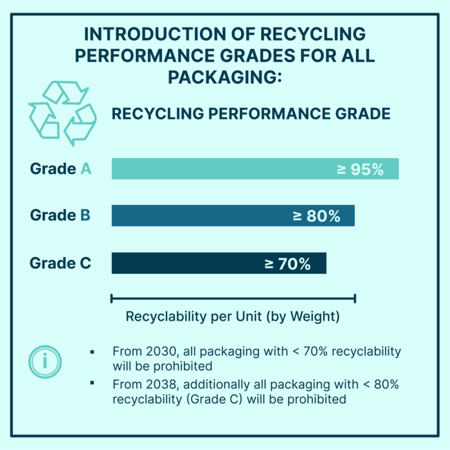
PACKAGING RECYCLABILITY
means your packaging must be designed so it can realistically be sorted and recycled within existing EU recycling systems. Certain packaging formats, material combinations, or unnecessary layers that are difficult to recycle may become restricted or non-compliant.
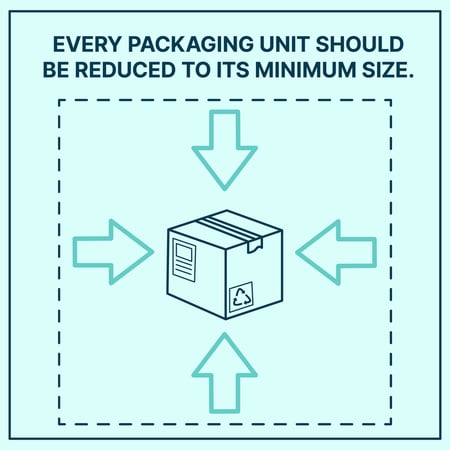
WASTE REDUCTION OBLIGATIONS
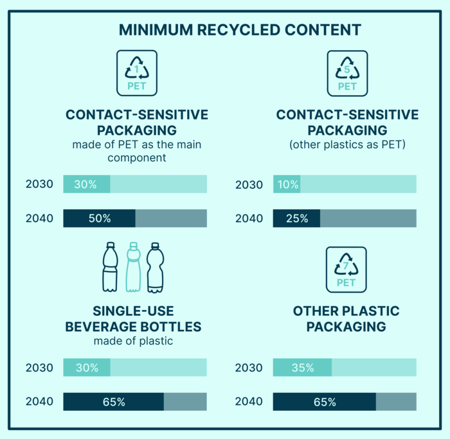
RECYCLED PLASTIC CONTENT REQUIREMENTS
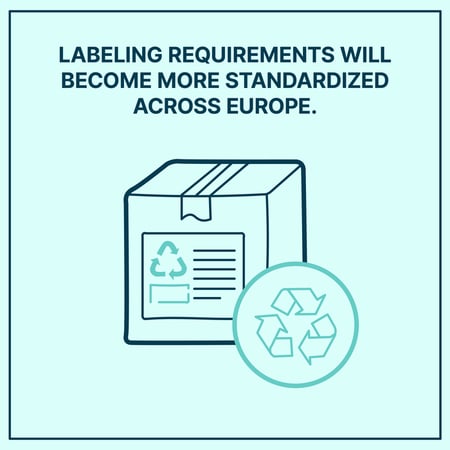
LABELING REQUIREMENTS
will become more standardized across Europe. Businesses may need to add harmonized recycling labels, material identification markings, or disposal instructions so consumers know how to correctly sort and recycle packaging waste.REUSABLE PACKAGING
From 1 January 2030, the EU will set clearer rules for reusable packaging. This means packaging may need to be designed so it can be used again many times, not just once. These rules may also affect restaurants, cafés, larger stores, grouped packaging, sales packaging, and transport packaging.
%20(1).webp?width=450&height=450&name=Minimum%20number%20(1)%20(1).webp "Reusable Packaging")
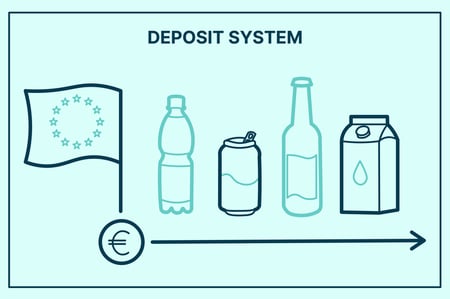
DEPOSIT RETURN SCHEME
By 1 January 2029, EU countries are expected to build or improve deposit return systems. The goal is to collect 90% of certain packaging separately each year, based on weight. These systems should work in a similar way across each country, so returns are easier and less confusing. A country may avoid this rule if it already collected more than 80% in 2026 and has a clear plan to reach 90% by early 2028.
AUTHORIZED REPRESENTATIVES
PPWR has two types of authorized representatives: the Authorized Representative for Producers and the Authorized Representative for EPR obligations. The first one helps with EU-wide packaging design rules, such as sustainability and labeling. The second one is needed in each EU country where a company sells products but has no local office. This EPR representative helps with registration, packaging reports, and contact with national authorities.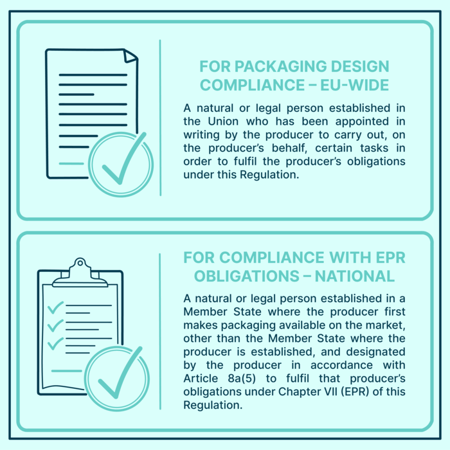
PACKAGING BAN
From 1 January 2030, PPWR will ban some single-use packaging, especially certain plastic packaging for grouped products, fresh fruit and vegetables, and small HORECA items. Very small businesses may be exempt if avoiding this packaging is not technically possible.
.webp?width=1000&height=535&name=PPWR_prohibits%20(1).webp "Packaging Formats")
These changes — recyclability standards, recycled content targets, and material restrictions — need to happen at the production level, which means your packaging supplier is the right point of contact to action them. We recommend bringing these requirements directly to them.
PPWR FOR AMAZON, EBAY, THEMU & CO.
E-commerce sellers will be hit hardest — marketplaces like Amazon are now expected to actively verify EPR registration numbers and delist products that don't comply.
PPWR also introduces new sustainability requirements for packaging, however we recommend these requirements to be handled directly by your packaging supplier. To remain compliant, you will need packaging registration numbers in the EU countries where you sell and make sure your packaging is labeled properly. This simplifies the processs without requiring overloading small brands with another regulatory complexity such as PPWR.
DON'T MISS THESE PPWR DEADLINES
12 August 2026
The PPWR becomes applicable across the EU. Businesses must start aligning packaging design, EPR responsibility, documentation and supplier data with the new regulation.
12 August 2027
Member States must have national EPR producer registers in place. Producers will need to register in the relevant countries and prepare for structured reporting.
2028
Important implementing rules become relevant, including Design for Recycling criteria, packaging minimisation and harmonised labelling.
2029
Reusable packaging will require dedicated re-use labelling. Eco-modulation becomes more important, linking fees to recyclability and environmental performance.
1 January 2030
Only packaging meeting recyclability grades A, B or C may be placed on the EU market. Recycled-content rules and the 50% empty-space ratio apply.
WHO IS AFFECTED BY PPWR?
All companies that place packaging or packaged products on the EU market are affected. The regulation covers the entire supply chain from packaging manufacturers to end sellers. If your business touches packaged goods in any capacity within the EU, PPWR compliance is mandatory.
EU Compliance Partner experts guide you through how PPWR impacts your business, including key requirements, timelines, and obligations.
%20(1).webp?width=400&height=279&name=happy_man_no_background_optimized%20(CUT)%20(1).webp "Full Compliance")
|
PACKAGING SUPPLIERS |
MANUFACTURERS |
IMPORTERS & DISTRIBUTORS |
|
NON-EU SUPPLIERS |
BRAND OWNERS |
E-COMMERCE SELLERS |

WHAT PPWR MEANS FOR YOUR BUSINESS
To comply, you need a clear understanding of your packaging. This includes knowing what materials are used, whether the packaging can be recycled, how it is labeled, and whether it meets upcoming EU design and sustainability requirements. These aspects are no longer optional checks but part of your legal responsibility.
In practice, this means working closely with your suppliers to gather accurate packaging data and verifying that all materials and labels meet EU standards. You must also maintain documentation that proves your compliance and keep it available for authorities or marketplaces when requested. At the same time, existing country-specific EPR obligations, such as registrations and reporting, still continue and must be managed alongside PPWR requirements.
YOUR COMPLETE COMPLIANCE SOLUTION
Everything you need to stay compliant across all EU markets. Our integrated approach handles the complexity so you can focus on growing your business.
Free Assessment
Get initial guidance before committing
Packaging Scope
Identify affected packaging & countries
PPWR Check
Review recyclability & design rules
EPR Mapping
Connect to national EPR systems
Documentation
Structure info for audits & authorities
Ongoing Control
Maintain compliance as rules evolve
WHAT IF I DON'T COMPLY WITH PPWR?

Starting August 2026, marketplaces like Amazon will reject your listings if you lack an Authorised Representative (AR) for packaging registration in your target countries.
This means selling to Austria requires an Austrian AR for local registration, while selling to Germany requires registration via LUCID through a German AR.
Failure to appoint these representatives results in immediate account blocks, shipment rejections, and heavy fines, as marketplaces will suspend non-compliant sellers to avoid their own legal liability.
WHY OUR APPROACH MAKES MORE SENSE?
OUR APPROACH
Before you pay: We will guide you on the correct path - no strings attached.
-
Recieve our compliance roadmap tailored to your products, before you commit to our service.
-
Talk to compliance experts with ecommerce expertise.
-
Keep it simple - only pay for what is minimally needed.
-
Marko our compliance manager is already working on your case, just submit your inquiry now.
OTHERS
Payment first: No clear path upfront - headaches and long waiting time.
-
Talk to sales not to compliance.
-
Pay upfront, be told later you can not sell your product in this market.
-
No peace of mind.
-
Your case number is #328219 ;) Our sales department will route your request and get back to you in several business days.
ALL YOUR QUESTIONS ANSWERED BEFORE YOU COMMIT
✔️ Are my materials problematic in the EU/UK?
✔️ Can I sell my products the way they are?
✔️ Do I need to change my product labels?
✔️ What documentation will I need?
✔️ How much will it cost?
PREPARATION IS KEY - WHY NOW?
Preparing early is critical! Delaying action can lead to rushed adjustments, supply chain issues, or interruptions in your ability to sell within the EU market. Businesses that start preparing now can take the time to properly review their packaging, align with suppliers, and build the required documentation without pressure. This reduces the risk of non-compliance and avoids costly last-minute changes.
Getting ready for PPWR means creating clarity within your processes, identifying potential gaps, and ensuring that your packaging meets both current and upcoming requirements. Taking action early allows you to stay compliant, maintain market access, and operate without disruption.

THE NEW WAY OF GPSR COMPLIANCE
.webp?width=400&height=276&name=stressed_man_background_optimized%20CUT%20(1).webp "Competitor Compliance")
| EU Compliance Partner | Big Law & Traditional Firms |
|---|---|
| ✔️We understand the unique problems of ecommerce sellers. The law and the practical real world ways of doing business are 2 completely different things. | ❌ We are lawyers and have no real world ecommerce understanding. |
| ✔️ We pick up the phone | ❌ 7–10 days to hear back (if at all). You’re just another case number |
| ✔️ Built for speed & ecommerce reality - Fast decisions, fast execution | ❌ Built for paperwork, not sellers - Slow processes, internal approvals |
| ✔️ Personalized service for every client | ❌ Indirect, standardized handling |
| ✔️ We understand Amazon Seller Central, Shopify & other marketplaces and will guide you with practical experience | ❌ No real marketplace experience |
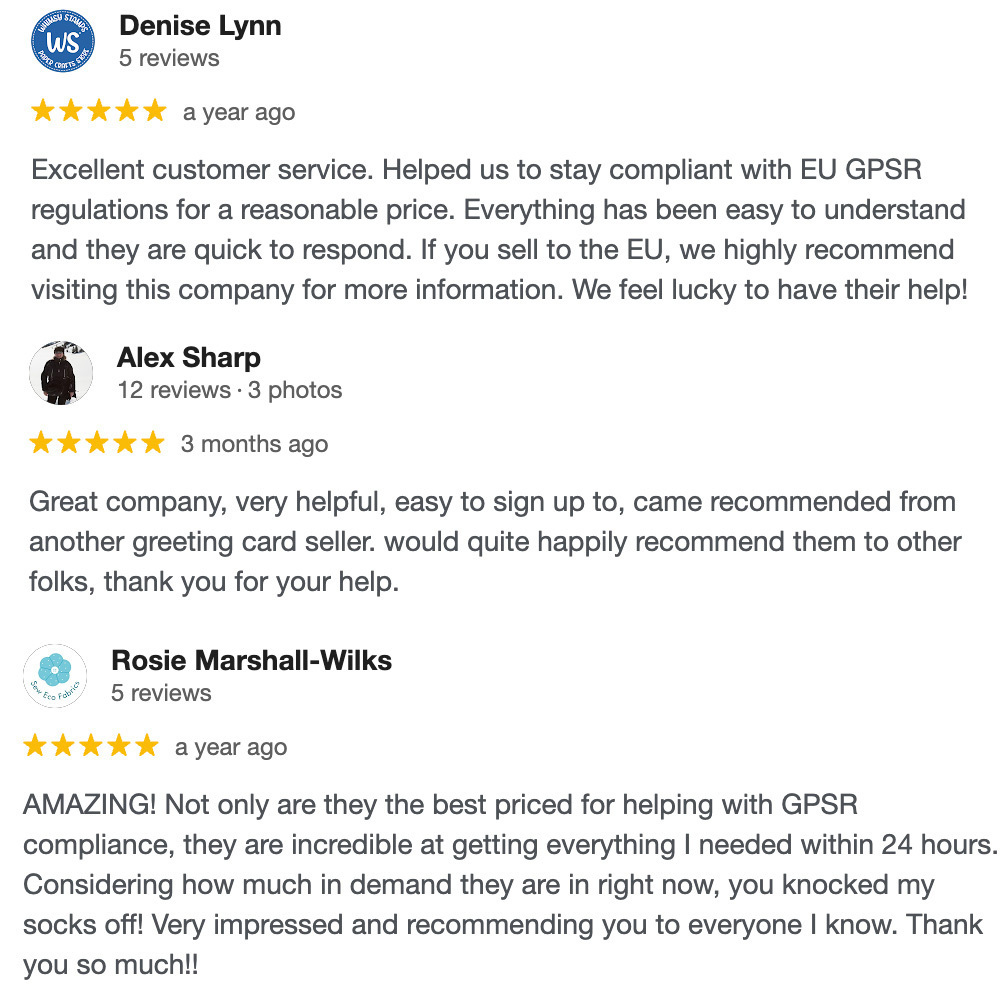
WHAT OUR CUSTOMERS SAY



READY TO ACHIEVE COMPLETE COMPLIANCE?
Ready to get compliant without losing time on confusing requirements, portals, and paperwork? Register now and our team will review your case, identify the obligations that apply to your products, and guide you through the full process step by step.
FAQ
What is the PPWR and why does it matter?
It replaces the old Packaging Directive with directly applicable EU rules for packaging design, recyclability, labelling, reuse, recycled content, EPR and waste reduction.
Does PPWR apply to non-EU or UK companies?
Yes, if their packaged products are placed on the EU market, even though the regulation does not directly apply inside their own country.
What are the main PPWR obligations?
Recyclability, recycled content, substance restrictions, packaging minimisation, labelling, reuse/refill targets, documentation and EPR-related obligations.
What documentation is required?
Companies need technical documentation, supplier data, conformity assessment records and EU Declaration of Conformity-type documentation, kept available for authorities.
What happens if packaging is non-compliant?
Non-compliant packaging may create market-access risk, authority requests, documentation failures, redesign costs and potential sales restrictions after the applicable deadlines.
Will there be harmonised labelling?
Yes. The regulation introduces harmonised labelling requirements to improve sorting and inform consumers about packaging materials and disposal.
Are reuse and refill systems mandatory?
Yes. The regulation sets specific reuse and refill targets for certain sectors and packaging types.
Can non-compliant packaging still be sold?
No. Packaging that does not meet the requirements of the regulation cannot be placed on the EU market after the applicable deadlines.
How we actually help you stay compliant?
We turn PPWR into a clear, executable process:
- Packaging data collection from suppliers
- Compliance checks against PPWR requirements
- Technical documentation creation
- Integration with your existing EPR setup
Are there restrictions on empty space in packaging?
Yes. The regulation introduces requirements to reduce unnecessary packaging volume, particularly relevant for transport and e-commerce packaging.
Does PPWR restrict hazardous substances in packaging?
Yes. The regulation limits substances of concern in packaging to reduce environmental and health risks.
Does PPWR apply to all packaging materials?
Yes. The regulation applies to all materials, including plastic, paper, metal, glass, and composite packaging.