
EPR COMPLIANCE SERVICE EU - WEEE REGISTRATION
StiftungEAR, ecosystem, ERPItalia, ECOTIC & More
We handle your WEEE registration, reporting, authorized representative requirements, and ongoing compliance in Germany, France, Spain, Italy, Poland, the Netherlands, Sweden, the UK, and more—so you can keep selling without interruptions.
WHO NEEDS A WEEE REGISTRATION IN THE EU?
If you sell electrical or electronic products in Europe, including through Amazon, eBay, Shopify, or your own website, you are required to obtain a WEEE registration.
The rules apply to manufacturers, importers, distributors, and non-EU sellers placing electronic products on the market.
ENTRY RATE
$589 first year, $489 subsequent years
*includes official registration fees
You will receive...
-
WEEE Number for defined product category
-
Product Marking and Labelling
-
Annual reporting of the quantities place on the market
-
Full EPR compliance incl. EAR fees obtaining your WEEE
COMPLIANCE MADE SIMPLE: YOUR DEDICATED PARTNER
Avoid the complexity of dealing with national WEEE registries, reporting deadlines, and compliance requirements yourself. Our team manages the registration process, helps you obtain the required WEEE numbers, and supports your ongoing reporting obligations so you can focus on growing your business.
EPR FEES BY COUNTRY
| Country | Pricing WEEE |
|---|---|
| Germany | From $500 |
| France | From $400 |
| Spain | From $400 |
| Italy | From $600 |
| Austria | From $500 |
| Belgium | From $200 |
| Bulgaria | From $400 |
| Croatia | From $600 |
| Cyprus | From $400 |
| Czech Republic | From $500 |
| Denmark | From $400 |
| Estonia | From $300 |
| Finland | From $400 |
| Greece | From $400 |
| Hungary | From $500 |
| Ireland | From $500 |
| Latvia | From $600 |
| Lithuania | From $600 |
| Luxembourg | From $700 |
| Malta | From $300 |
| Netherlands | From $100 |
| Norway | From $800 |
| Poland | From $500 |
| Portugal | From $600 |
| Romania | From $500 |
| Slovakia | From $500 |
| Slovenia | From $800 |
| Sweden | From $500 |
| United Kingdom | From $100 |
Prices are annual service fees and may vary depending on product category, quantities, recycling fees, and country-specific requirements.
HOW TO GET A WEEE NUMBER
We determine which registration category is relevant for your products.
.webp?width=515&height=515&name=europe_map1%20(1).webp)
You tell us which countries are relevant.

Hire us – we register your brands with authorities.
WEEE number is issued (2–8 weeks) after registration.
WHY CHOOSE EU COMPLIANCE PARTNER FOR WEEE REGISTRATION?
KNOW YOUR WEEE REGISTRATION PATH BEFORE YOU COMMIT
Clear guidance on countries, categories and registrations.
-
Recieve our compliance roadmap tailored to your products, before you commit to our service.
-
Talk to compliance experts with ecommerce expertise.
-
Keep it simple - only pay for what is minimally needed.
-
Marko our compliance manager is already working on your case, just submit your inquiry now.
PAY FIRST. DISCOVER WEEE REGISTRATION GAPS LATER
No clear path upfront — just delays and missing WEEE numbers.
-
Talk to sales not to compliance.
-
Pay upfront, be told later you can not sell your product in this market.
-
No peace of mind.
-
Your case number is #328219 ;) Our sales department will route your request and get back to you in several business days.
ALL YOUR QUESTIONS ANSWERED BEFORE YOU COMMIT
✔️ Can I sell my products the way they are?
✔️ How much will it cost?
✔️ What documentation will I need?
✔️ Do I need to change my product labels?
✔️ Are my Products problematic in the EU/UK?
THE NEW WAY OF COMPLIANCE
%20(1).webp?width=400&height=279&name=happy_man_no_background_optimized%20(CUT)%20(1).webp "EU Compliance Partners Clear ecommerce compliance support")
.webp?width=400&height=276&name=stressed_man_background_optimized%20CUT%20(1).webp "Traditional compliance firm process")
| EU Compliance Partner | Big Law & Traditional Firms |
|---|---|
| ✔️ We understand the unique problems of ecommerce sellers. The law and the practical real world ways of doing business are 2 completely different things. | ❌ We are lawyers and have no real world ecommerce understanding. |
| ✔️ We pick up the phone | ❌ 7–10 days to hear back (if at all). You’re just another case number |
| ✔️ Built for speed & ecommerce reality - Fast decisions, fast execution | ❌ Built for paperwork, not sellers - Slow processes, internal approvals |
| ✔️ Personalized service for every client | ❌ Indirect, standardized handling |
| ✔️ We understand Amazon Seller Central, Shopify & other marketplaces and will guide you with practical experience | ❌ No real marketplace experience |
WHAT IS WEEE COMPLIANCE?
⚠️IF YOUR BUSINESS IS BASED OUTSIDE THE EU OR THE UK, YOU ARE LEGALLY REQUIRED TO REGISTER FOR WEEE BEFORE SELLING ELECTRICAL OR ELECTRONIC PRODUCTS IN THE EU OR UK.
WEEE compliance ensures that electrical and electronic equipment is properly registered, reported, and recycled in line with EU and UK environmental laws.
WE AS YOUR WEEE COMPLIANCE PARTNER BECOME:
-
Your official WEEE authorized representative
-
The registered contact with national WEEE authorities and schemes
-
The party managing WEEE number registration and renewals
-
Responsible for ongoing reporting and declarations
-
Coordinator for recycling, take-back, and disposal obligations
-
Support contact in case of authority audits or enforcement actions

WHAT PRODUCTS NEED WEEE REGISTRATION?
From household electronics and smart devices to toys with electronics, chargers, and LED products — any electrical or electronic equipment placed on the EU or UK market requires WEEE registration to ensure proper collection, recycling, and environmental compliance. Electrical products may also fall under the Radio Equipment Directive for wireless devices and RoHS restrictions on hazardous substances. These obligations are separate from WEEE registration.
| B2C equipment (can be used in private households) | B2B equipment (exclusively for commercial environments) |
|---|---|
| Temperature exchange equipment that can be used in private households | Temperature exchange equipment for use in other than private households only |
| Screens that can be used in private households | Screens for use in other than private households only |
| Gas discharge lamps that can be used in private households | Lamps for use in other than private households only |
| Lamps that can be used in private households | Large equipment for use in other than private households only |
| Large equipment that can be used in private households | Large photovoltaic panels for use in other than private households only |
| Large photovoltaic modules that can be used in private households | Small equipment for use in other than private households only |
| Small equipment that can be used in private households | Small photovoltaic panels for use in other than private households only |
| Small photovoltaic modules that can be used in private households | Small IT and telecommunication equipment for use in other than private households only |
| Small IT and telecommunication equipment that can be used in private households |
*Key rule from stiftung ear: you register per “type of equipment”, not per individual product model (e.g., not “one toaster”, but the correct equipment type).

⚠️WHAT HAPPENS IF YOU DON'T COMPLY⚠️
If you place electrical or electronic equipment on the market without proper registration, reporting, and take-back arrangements, authorities can impose fines of up to €100,000 or more per violation depending on the country. You also risk immediate sales bans, customs blocks, and marketplace delistings on platforms like Amazon or eBay. In serious cases, you may be held liable for improper waste management and face long-term restrictions from selling within the EU market.
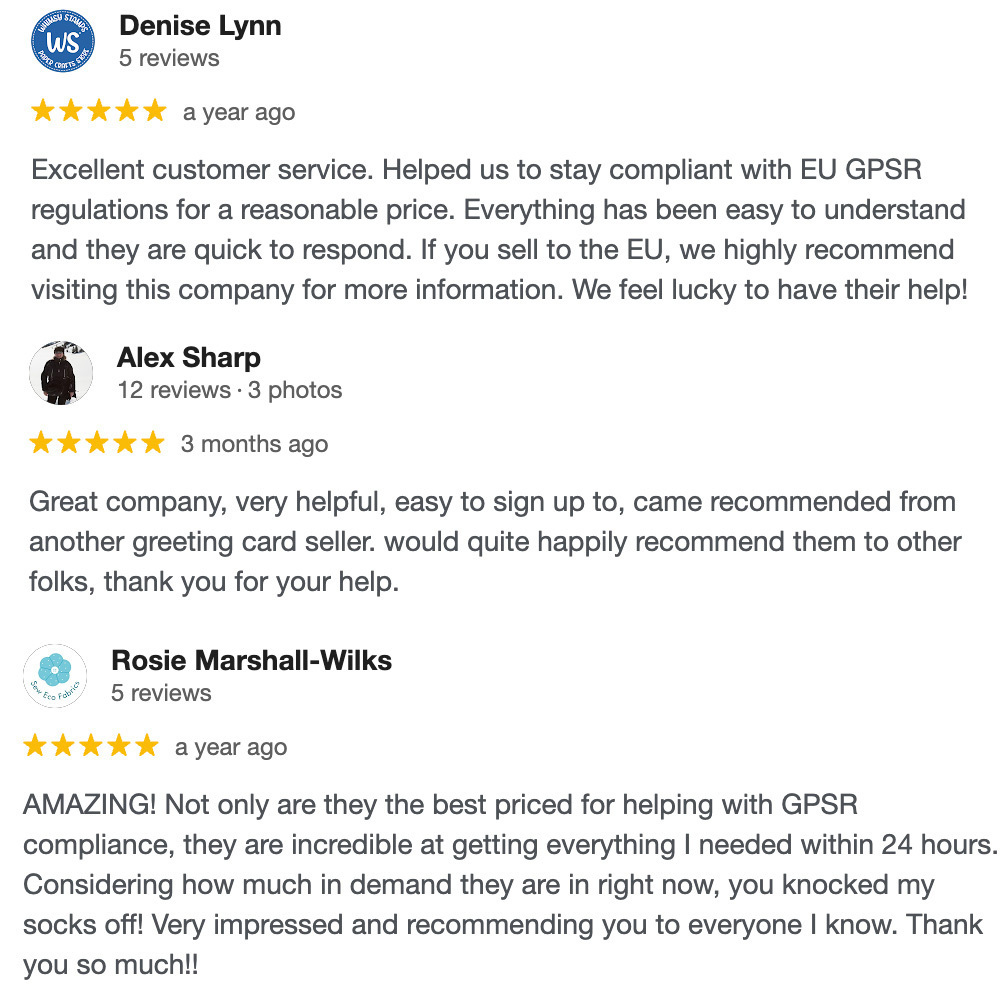
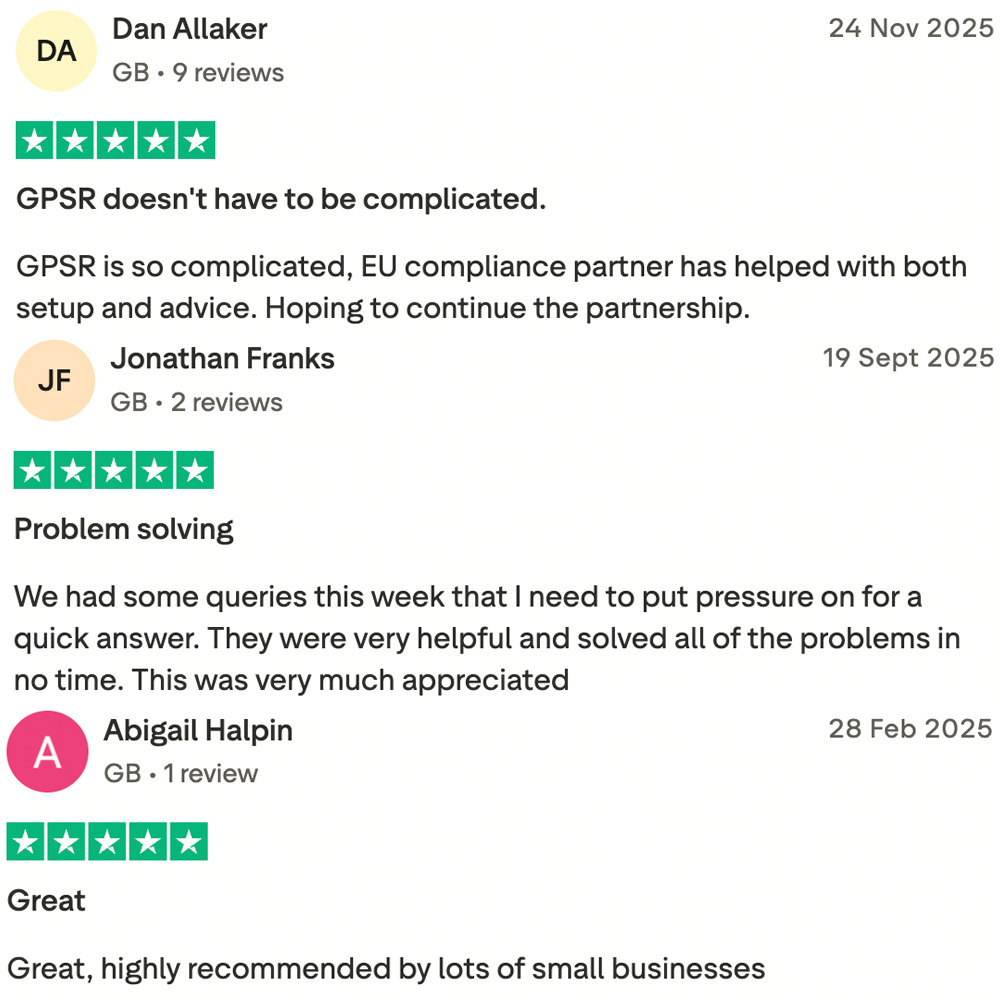
WHAT OUR CUSTOMERS SAY:


READY TO START SELLING?
Fill out the Form, we get started right away, review your reuqest and get back within 48 hours.
FAQ
How long does EPR registration take?
- Packaging: 1–4 weeks
- WEEE & Batteries: 2–12 weeks depending on the country
- Fast: Germany
- Slowest: Italy, Spain
How do I report my packaging/electronics/battery weights to you?
- For France, you need to estimate your packaging weight and type well in advance, even providing projections for next year’s sales.
- Germany requires clear declaration of packaging waste with payment of recycling fees; it’s unavoidable if you want to sell there.
- There’s a baseline registration fee (e.g., €80 covers a modest waste volume in France), and if you cross this threshold, you pay more depending on actual reported volumes.
- Where uncertainties exist—like for electronics and textiles—our team can help interpret requirements, and we cover the entire EPR process for clients, including packaging reporting and fee calculations.
- If you’re unsure about the reporting process or exact categories, we can provide personalized overviews and direct assistance so you meet all compliance obligations.
What are the minimum mandatory EPR steps?
- EPR registration must be completed in each country before making any sales—this is a legal requirement even for a single product.
- You must declare packaging waste, pay recycling fees, and know the type and weight of your packaging for EPR reporting.
- Minimum steps include registering for packaging, electronics, and batteries (if applicable), conducting a risk assessment for every product, and using required pictograms and warnings on the packaging. There are sometimes thresholds and country-specific exceptions, but registration is generally required from the start.
How strict is EPR enforcement? Can I skip some countries?
- EPR registration is essentially mandatory for every EU country where you sell—even a single product—because customs can seize goods if unregistered.
- Enforcement is strongest in countries like Germany, France, Belgium, Austria, and the Netherlands. Many sellers try to skip less strict countries, but this carries risk.
- Sometimes, platforms like Amazon offer pay-on-behalf EPR programs for countries like France, Italy, and Spain, reducing the need for direct registration. However, most countries enforce compliance, and skipping countries is risky as there are sometimes systematic checks, especially at customs.
What is EPR for WEEE, and why is it important for Amazon sellers in the EU?
EPR (Extended Producer Responsibility) for WEEE (Waste Electrical and Electronic Equipment) is a regulatory framework across the EU that requires producers and sellers of electrical and electronic equipment to manage the entire lifecycle of their products, including collection, recycling, and disposal. For Amazon sellers, this means complying with each EU country's specific regulations to avoid fines and maintain the ability to sell electronic products across the EU.
How do I register for EPR compliance as an Amazon seller in the EU?
What steps should I take to comply with EPR for WEEE as an Amazon seller in the EU?
To comply with EPR for WEEE as an Amazon seller, follow these steps:
- Register with National Authorities: Ensure you are registered with the relevant authorities in each EU country where you sell electronic products.
- Obtain WEEE Registration Numbers: Acquire the necessary WEEE registration numbers for each country, as these are often required by Amazon for listing your products.
- Set Up Take-Back Systems: Establish or join a compliant take-back program to handle electronic waste from customers.
- Report Regularly: Submit regular reports to the authorities on the amount of EEE placed on the market and the waste collected and recycled.
- Consult with Compliance Experts: Work with professionals who understand the complex regulations to ensure full compliance.
What are the consequences of not complying with EPR for WEEE regulations in the EU?
Non-compliance with EPR for WEEE regulations can lead to significant penalties, including fines and restrictions on selling electronic products in EU countries. Additionally, Amazon may remove non-compliant listings, which can impact your ability to sell on the platform. To avoid these risks, it's crucial to understand and meet all registration, reporting, and recycling requirements for each country where you sell electronic products.
How do I register for EPR compliance as an Amazon seller in the EU?
Amazon sellers must register with the relevant national authorities in each EU country where they sell electrical and electronic equipment. This involves providing information about the products sold and obtaining a unique WEEE registration number for each country. Amazon often requires these numbers to list electronic products in EU marketplaces.
Do I need EPR registration in every EU country?
- EPR registration is required in each EU country where your products are sold—every country has its own scheme and compliance is mandatory from the first product sold.
- You must register under every relevant national EPR system, such as Lucid in Germany; the process includes paying official recycling fees based on the type and amount of packaging waste, electronic waste and battery waste.
- Our company can handle EPR registration across all EU countries and manage the paperwork, registration, and fee calculations for packaging, electronic, and battery waste streams.
Amazon only asks for a few EPR numbers — why not all?
Amazon typically handles EPR for France, Italy, and Spain using a pay-on-behalf program, so sellers aren’t required to register or provide their own EPR numbers for these markets if you follow the program.
If I ship directly from China to EU consumers, who carries the EPR responsibility?
In most cases, you carry the EPR responsibility if you are the company selling the product to EU consumers, even if the products are shipped directly from China.
The exact responsibility depends on your sales model:
- You sell through your own website and products are shipped from China to EU consumers: You are typically considered the producer and must register for applicable EPR obligations.
- You sell through Amazon, eBay, or another marketplace: You may still be responsible for EPR, although marketplaces increasingly enforce compliance and may request registration numbers.
- An EU-based importer purchases the goods from you and then resells them: The importer may become the producer for EPR purposes, depending on the country and setup.
Because producer definitions vary between countries and product categories, the answer can change depending on:
- Your company location
- Where inventory is stored
- Whether you sell B2B or B2C
- Whether products contain electronics or batteries
- Which EU countries you sell into
What registrations should I prioritize first if I am launching into multiple EU countries?
The answer depends on your product and sales model, but for most non-EU Amazon and ecommerce sellers, the typical priority order is:
- Packaging EPR – This applies to nearly every physical product sold in the EU and is often the first obligation authorities and marketplaces expect.
- WEEE Registration – Required if your products contain electrical or electronic components.
- Battery Registration – Required if your products contain batteries, whether removable or built-in.
- Authorized Representative Appointments – Some countries require non-EU sellers to appoint an Authorized Representative before registrations can be completed.
- Additional Product-Specific Requirements – Depending on the product and country
Which countries require an Authorized Representative and which allow direct registration?
Unfortunately, there is no EU-wide rule. The answer depends on the country, EPR stream (Packaging, WEEE, Batteries), and whether you are established inside or outside that country.
These countries commonly require an Authorized Representative for one or more EPR streams: Germany, Austria, Spain, Poland, Sweden, Finland, Denmark, Czech Republic, Slovakia, Hungary, Portugal, Greece, Romania, Bulgaria, Croatia, Slovenia, Lithuania, Latvia, Estonia.
Important Exceptions:
The answer can change based on:
- Packaging vs WEEE vs Batteries
- EU company vs non-EU company
- Local establishment in the country
- Whether inventory is stored locally
- Whether you sell B2B or B2C
For example:
- A US seller may need an Authorized Representative for Packaging in one country but be able to register directly for WEEE in the same country.
- An Austrian company may register directly in Germany for some obligations but a US company may require an Authorized Representative.
Which countries are known for the strictest enforcement and highest penalties?
While EPR enforcement varies by product category and authority, the following countries are generally considered the strictest and most actively enforce compliance:
Germany, France, Austria, Spain, Sweden, Netherlands, Belgium, Poland, Italy.
These countries are known for:
- Active marketplace enforcement (Amazon, eBay, Kaufland, Bol, etc.)
- Regular audits and quantity verification
- Mandatory registration before market placement
- Significant fines for non-compliance
- Increased cooperation between authorities and marketplaces
For most international sellers, Germany, France, Austria, and Spain are typically the highest-priority countries from a compliance risk perspective due to their mature enforcement systems and marketplace scrutiny.
How do I estimate annual quantities when I have no historical sales data?
If you're launching a new product and have no sales history, most EPR authorities and compliance schemes allow you to submit a reasonable estimate for your first reporting period.
Common approaches include:
- Using your expected first-year sales forecast.
- Estimating based on planned inventory purchases.
- Using projected Amazon FBA or ecommerce sales volumes.
- Starting with a conservative estimate and adjusting once actual sales data becomes available.
To calculate estimated quantities:
- Determine the weight of each packaging component, electronic product, or battery.
- Estimate the number of units you expect to sell during the reporting period.
- Multiply the unit weight by the expected sales volume.
For example, if each product contains 100g of packaging and you expect to sell 5,000 units, your estimated packaging quantity would be approximately 500kg.
If my product contains electronics plus packaging plus batteries, what registrations are required?
In most cases, you will need multiple EPR registrations, as each component is regulated separately.
Depending on the product and countries where you sell, this may include:
- Packaging EPR – Covers the product packaging, shipping boxes, mailers, labels, inserts, and other packaging materials placed on the market.
- WEEE Registration – Required for electrical and electronic equipment.
- Battery Registration – Required if the product contains removable or built-in batteries.
For example:
- Power Bank → Packaging + WEEE + Batteries
- Bluetooth Speaker → Packaging + WEEE + Batteries
- Wireless Keyboard → Packaging + WEEE + Batteries
- Rechargeable Toy → Packaging + WEEE + Batteries
- Mains-Powered Lamp (No Battery) → Packaging + WEEE
- Battery Pack Sold Separately → Packaging + Batteries
The exact registrations required depend on:
- The product's functionality
- Whether batteries are included or built-in
- The countries where the product is sold
- Whether inventory is stored locally or through services such as Amazon FBA
What happens if I change Authorized Representatives or compliance providers?
Changing an Authorized Representative or compliance provider is usually possible, but the process depends on the country, EPR category, and registration system involved.
In most cases, you may need to:
- Revoke the existing appointment.
- Sign a new Power of Attorney.
- Transfer existing registrations where permitted.
- Update marketplace records and compliance documentation.
- Notify the relevant authorities or recycling schemes.
Some countries allow registrations to be transferred, while others require new registrations to be created under the new representative or provider.
What is a WEEE certificate, and will I receive one after registration?
A WEEE certificate generally refers to official proof that your business is registered for WEEE compliance in a specific country. Depending on the national system, this proof may be issued as a registration confirmation, producer registration number, or formal certificate. Once your registration is approved, we provide you with the available official confirmation or WEEE number. WEEE registration is country-specific, so one certificate or registration does not automatically cover every EU or UK market.
EXPERTS IN LEADING MARKETPLACES


